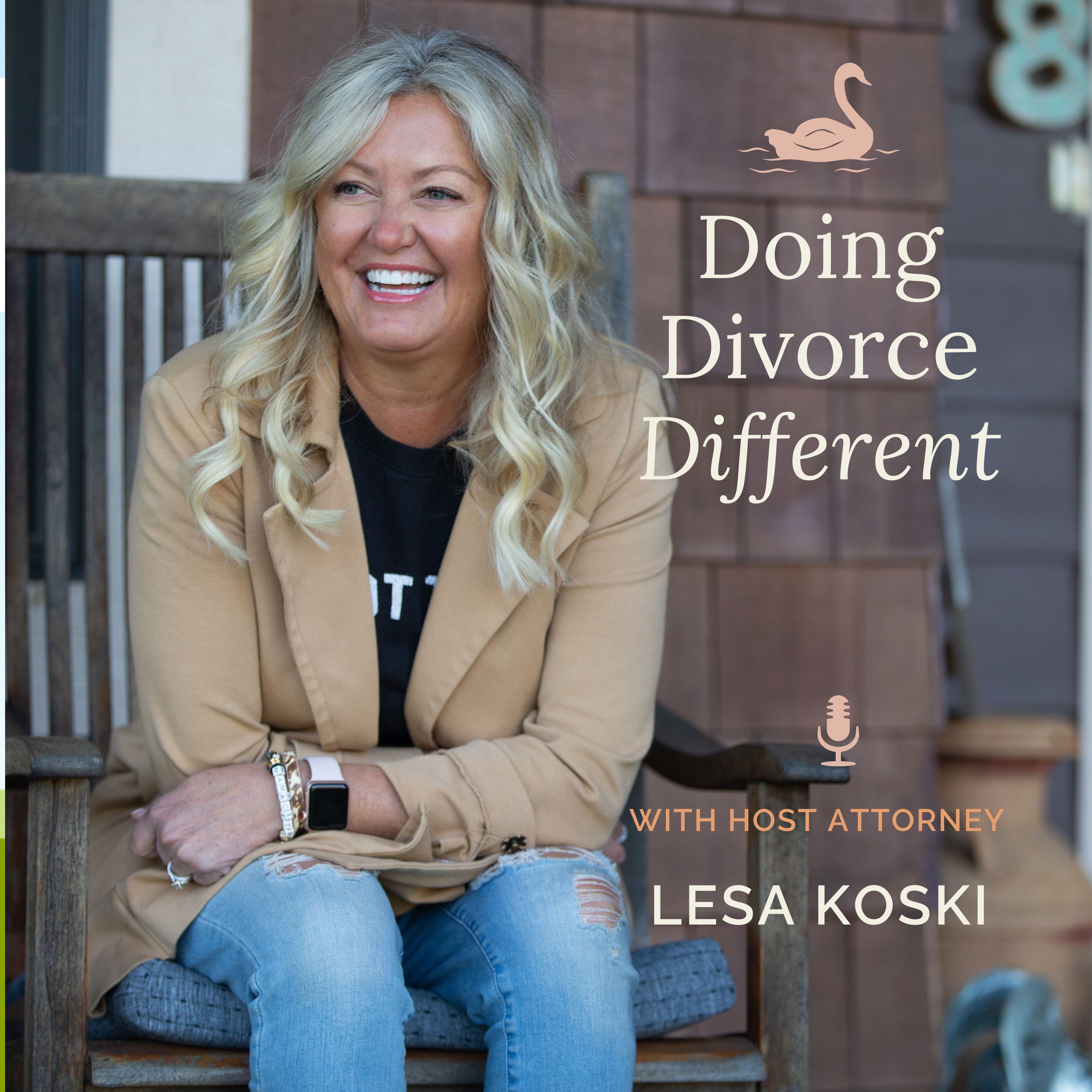
GLP-1 Weight Loss: What You Need to Know Before, During & After the Shot | Ashley Koff, RD
What if the goal is not to become smaller, but to help your body work better? In this episode of Doing Divorce Different, Lesa Koski talks with registered dietitian and weight-health expert Ashley Koff, RD, author of Your Best Shot: The Personalized System for Optimal Weight Health—GLP-1 Shot or Not.
Ashley reframes GLP-1 weight loss by explaining why weight is a signal—not a moral judgment—and why total weight can include bone, muscle, fat, and water. She shares how naturally occurring GLP-1 and related hormones are connected with appetite, satiety, blood sugar, digestion, and other aspects of metabolic health.
You will hear a nuanced conversation about when GLP-1 medication may be one helpful tool, why it is never the entire plan, and what to consider if you experience side effects or prefer a non-medication approach. Ashley also discusses food noise, gut health, hydration, nourishment, strength, sleep, and the often-missed role of rest and recovery.
For anyone navigating divorce, menopause, illness, or another major life transition, this episode offers a more compassionate way to approach GLP-1 weight loss and overall well-being. Instead of chasing a number on the scale, Ashley encourages listeners to protect muscle, bone, energy, and the resources needed to live their purpose.
If you are curious about GLP-1 weight loss, struggling with food noise, or wondering why a popular plan has not worked for your body, listen before making your next move. Save this episode, share it with a friend, and bring your questions to a qualified member of your health-care team.
This episode is educational and is not medical advice. Consult qualified health professionals before starting, stopping, or changing medication, supplements, nutrition, or exercise.
Timestamps (in parentheses):
(00:00) Introduction to weight health with Ashley Koff, RD
(07:00) Why weight is a signal—not a judgment
(10:00) GLP-1 medications are a tool, not a magic solution
(12:40) GLP-1, GIP, muscle, and bone-health nuance
(17:05) What everyone needs—with a GLP-1 medication or without one
(21:30) How to evaluate whether medication may fit your needs
(30:15) Your Best Shot and the foundations of digestion and hydration
(34:50) Why drinking more water is not the whole hydration story
(38:30) Food noise and ways to support the body without medication
(43:35) Why “weight loss” may include losses you do not want
(49:15) Rest, recovery, and caring for yourself during divorce
(52:10) Giving yourself the best shot at your next chapter
(54:05) Closing thoughts and where to learn more
Timestamp note: These timestamps are based on the supplied transcript and should be checked against the final edited audio or video before publishing.
Key Takeaways:
- Weight health includes bone, muscle, fat, water, energy, digestion, and other signals—not only the number on the scale.
- GLP-1 medications may be useful for some people, but they do not replace individualized nutrition, hydration, movement, sleep, monitoring, and recovery.
- “Weight loss” can include unwanted muscle, bone, water, hair, and energy loss; a better plan defines the specific outcome being pursued.
- Food noise and medication side effects deserve personalized assessment rather than shame, guesswork, or one-size-fits-all advice.
- During divorce or another demanding transition, rest and recovery are legitimate parts of caring for your health.
Guest Bio:
Ashley Koff, RD, is the USA Today bestselling author of Your Best Shot (HarperOne), founder of The Better Nutrition Program (BNP), and a pioneering voice behind the emerging weight health movement. A practitioner and thought-leader with more than 25 years of experience, Ashley has helped redefine how we approach weight, shifting the conversation from weight loss to weight health, a science-based framework focused on metabolic function, hormonal regulation, and sustainable outcomes. Through her work with patients, clinicians, leading brands and companies, and health organizations, Ashley has developed practical systems that translate complex nutrition science into personalized strategies people can actually implement. In Your Best Shot, Ashley introduces the concept of weight-health hormones, GLP-1, GIP, CCK, and PYY, as key regulators of weight health. The book presents the first functional assessment framework for these hormones along with a personalized optimization approach designed to support weight health whether using GLP-1 medications or not (“shot or not”). A trusted expert featured across major media and a sought-after educator for health professionals, Ashley has been recognized as one of CNN’s Top 100 Health Makers and named “Hollywood’s Leading Dietitian” by InStyle. Through her clinical work, educational programs, and writing, Ashley continues to lead a growing movement toward better, not perfect, nutrition that supports long-term metabolic and weight health.
Resource Links:
- Your Best Shot by Ashley Koff, RD
- Ashley Koff and The Better Nutrition Program
- OsteoStrong Minnesota—Lesa Koski affiliate referral
- Soberlink family-law resources—Lesa Koski affiliate referral
https://www.instagram.com/ashleykoffapproved/?hl=en, https://www.linkedin.com/in/ashley-koff/, https://substack.com/@ashleykoffrd?r=3fuq67&utm_campaign=profile&utm_medium=profile-page
Affiliate disclosure: Lesa may receive compensation if you make a purchase through an affiliate link, at no additional cost to you.
Tags/Keywords:
GLP-1 weight loss, weight health, Ashley Koff RD, Your Best Shot book, GLP-1 medications, GLP-1 shot or not, gut health, food noise, metabolic health, women’s health, nutrition during divorce, divorce wellness, muscle loss, bone health, strength training, rest and recovery, hydration, semaglutide, tirzepatide, appetite hormones, personalized nutrition, healthy weight management, perimenopause health, menopause nutrition, Doing Divorce Different, Lesa Koski
Transcript
Welcome back, listeners.
2
:I am so excited.
3
:I have such a treat today, and this is,
like, such a treat for me, and this is
4
:the Doing Divorce Different podcast.
5
:And we talk about being well through hard
transitions, and just in life in general.
6
:I mean, this really can
be helpful to anyone.
7
:But I have the lovely Ashley Koff
with me today, and she's a big deal.
8
:I mean, you really are.
9
:You're one…
10
:I mean, I think InStyle Magazine
said you were the top dietician
11
:for Holly- This is amazing.
12
:We're gonna talk about
weight health, I think.
13
:Is that what you call it?
14
:Weight health.
15
:Not weight loss, weight health.
16
:And Ashley, as a woman living life
This is something that we, we all
17
:deal with, I truly believe, or
family members dele- deal with.
18
:So Ashley's got a book o- out
called Your B- is it Your Best Shot?
19
:Correct.
20
:Is that what?
21
:Mm-hmm.
22
:Yeah.
23
:Yeah, and I know that you
talk about GLP-1s, and you
24
:talk about not using GLP-1s.
25
:So we're gonna, like, just dig into
all the good information about being
26
:healthy, um, and our weight and nutrition.
27
:So I just- I'm so thankful
that I get to have a big deal
28
:on and I get to, like, learn.
29
:I'm gonna be taking notes as you go.
30
:But welcome, and would you mind
just sharing with the listeners what
31
:led you to do this amazing work?
32
:Speaker 2: Well, thank you so much.
33
:Um, and I love this.
34
:We're all big deals.
35
:Like, so let's just be super clear.
36
:We are an ecosystem.
37
:Like, there are so many people that I
have met through my work that are so
38
:important to our lives and everything
that this planet and people need.
39
:And when we are challenged by our
not having weight health, um, we are
40
:then not able to fulfill our lives.
41
:Like, to…
42
:And- and one of those challenges
is when life throws us a curveball
43
:or when we create a curveball, and
we're like, "I don't wanna be with
44
:that person," or, "I'm choosing not
to be with that person," and here.
45
:So for me, this really goes
back to my eight-year-old self.
46
:Um, and I was, like, born a badass.
47
:Like, I was, I just was out there.
48
:I was, uh, born in the- the Midwest.
49
:I had two brothers.
50
:I was the only girl in my family
for, like, generations, but, um, I
51
:never thought of that as different.
52
:Like, it was just, like, go.
53
:Like, you're gonna run,
you're gonna change the world.
54
:At eight, society was
like, "You have a belly."
55
:Kids and adults and other
people were like, "You're fat."
56
:And my doctor was like, "You're no longer
normal," like, on a, on a BMI chart, you
57
:know, or whatever they were looking at.
58
:So for me, that was a moment.
59
:I actually didn't take that moment and
was like, put my head in the sand and
60
:was like, "Oh, I'm not a badass anymore."
61
:Like, I'm not, you know, whatever.
62
:I was like, "Uh-oh, I got a weakness."
63
:Like, this superhero's got a kryptonite.
64
:I gotta get rid of that.
65
:So I started down the path that society
tees up for all of us, which is diet
66
:and exercise, and also under feeling
and believing, because what I was
67
:told was my weight was my problem.
68
:It was mine to deal with.
69
:It was my responsibility, and if diet
and exercise didn't work, I was the
70
:pro- like, I was a failure, right?
71
:So it was so disempowering.
72
:There were moments where it worked.
73
:Like, you know, if I didn't eat or
when I had my tonsils out, like, I lost
74
:weight, and it was like, "Oh, great."
75
:Like, "Look at you, size six," you know?
76
:But all through that time period,
it was these highs and lows
77
:based on something that, like, I
literally didn't have control over.
78
:And that, for me, was
like this constant…
79
:It was almost like I was living two lives.
80
:'Cause the rest of my life, if I
worked hard at anything, I could
81
:accomplish what I wanted to accomplish.
82
:So years later, I-- after dieting
and all this other stuff, I would
83
:become a dietician because I
thankfully met someone who actually
84
:told me that my weight was a signal.
85
:More importantly, he told me that my
weight's components were a signal,
86
:and that those components were telling
us that my body wasn't working the
87
:way that it was supposed to work.
88
:And he honed in on, "You've been
taking antibiotics your whole
89
:life, and then you added birth
control, and then you drank alcohol.
90
:And like, you did all these things that
disrupted how your gut was functioning.
91
:And at times, you got really
stressed about it, or you stressed
92
:your body out by over-exercising
and under-resourcing, et cetera."
93
:All of that meant that
it really didn't matter.
94
:He said to me, "It literally isn't
what you eat or what you're not eating.
95
:It's that your digestion
isn't working right.
96
:It doesn't have-- Your body doesn't
have what it needs to work better."
97
:That's why I became a dietician.
98
:That's why I turned around and was
like, "Holy moly, it wasn't me."
99
:Like, right?
100
:And that's the moment I want
you all to have right now.
101
:This isn't you.
102
:This moment right now is, we
have been sold a bill of goods.
103
:We have been sold a faulty bridge.
104
:It's a plank.
105
:Weight loss and focusing on total weight
doesn't get us to where we wanna go.
106
:We wanna go where our body has what
it needs and, as a result, it works
107
:the way it's supposed to work.
108
:And even when it's not working the
way it's supposed to work, you know, a
109
:disease happens or something happens,
it's res- we've built a resilience, and
110
:so we can overcome those challenges.
111
:That's weight health.
112
:And weight health is where your body's
weight, the parts of your weight,
113
:your bone, your muscle, and your fat,
and the water content, they tell us.
114
:They're signals, just like your blood
pressure, your blood sugar, your energy.
115
:Like, they're signals that tell us things.
116
:So then in 2004, I met GLP-1 and GIP.
117
:These are hormones that we make in
the lining of our digestive tract
118
:that you guys hear about today
as a medication, a GLP-1 agonist,
119
:or tirzepatide as GLP-1 and GIP.
120
:But they're actually hormones in our body.
121
:So it'd be like if you just met
Synthroid today and you were like,
122
:"Oh my God, Synthroid is this
thing that helps my thyroid run."
123
:And then you're like, "Wait, no, it's
actually a thyroid hormone," right?
124
:So we have these hormones.
125
:Those hormones regulate bone, muscle, fat,
water, blood sugar, appetite, satiety,
126
:blood flow, blood pressure, inflammation.
127
:I could keep going on.
128
:Our body makes weight health hormones.
129
:So why in the world would the goal be
anything other than to optimize our
130
:weight health by making sure that these
hormones are working better for us?
131
:And we can do that by replacing
them with medication, or we
132
:can do that without medication.
133
:So that's the whole…
134
:There you go, my dear.
135
:Okay.
136
:And we're going to deal with that
now so that everybody, no matter
137
:what you're going through in your
life, can learn and understand how
138
:to optimize your weight health.
139
:Speaker: I love this.
140
:I love this.
141
:And okay, and I wanna hear both.
142
:I wanna hear about how to do it
with- without using the medications.
143
:Speaker 2: Yes.
144
:Speaker: And then I've, I know a
lot of people, I have a lot of close
145
:friends who are on the medication.
146
:Yeah.
147
:They've had great results.
148
:And, and I wanna find out from
you, are there any downsides?
149
:I've had people on the podcast that
have said, "Oh, maybe it's kinda messing
150
:with your bone density a little bit."
151
:Speaker 2: Yeah.
152
:Speaker: Um, you know, I don't- And
this is my humble opinion, I don't
153
:know really a lot about it, but I kinda
think it's not like the magic pill.
154
:You still have to be healthy
overall and, and do your lifting
155
:and your walking and all that.
156
:But you, you get to start where you want.
157
:Do you wanna talk about the GLP?
158
:Let's
159
:Speaker 2: start here.
160
:All right.
161
:Let's start with any
medication is not a magic pill.
162
:All right?
163
:Any diet plan, any program, like so eating
100 grams of protein or what, you know,
164
:whatever it is, there's no one tool or
pill that is the solution to our health.
165
:The other part about this is
we have so much weight bias.
166
:Remember I told you that the weight…
167
:Okay, so the wellness
industry is like $2 trillion.
168
:The weight indust- I mean, we're like
in the billions of dollars in, in
169
:when, you know, when we look at this.
170
:Their thesis is, uh, in order to make
money, they have to tell you that you're
171
:the problem, and that with their tool
you will be able to achieve what it is
172
:you want to achieve, and that's flawed.
173
:What I'm here to tell you is your
body not working the way that it's
174
:supposed to, we have to decode that
and we have to help it work better.
175
:So when we talk about these
medications, I want us to understand
176
:that everything that I'm about to
say applies for every medication.
177
:Just gonna give you an example.
178
:If you smoke a cigarette every day and it
helps you poop every morning, and then you
179
:quit smoking and suddenly you don't poop
every morning, that's because you quit
180
:using the agent that was helping you poop.
181
:Same thing for coffee or caffeine, and the
same thing for a medication that millions
182
:and millions of Amer- Americans are on.
183
:You can choose it.
184
:It's a proton pump inhibitor which
suppresses stomach acid if our
185
:acid is too high, or maybe you're
on a statin and you're getting…
186
:You're lowering your cholesterol there.
187
:If you use either of those and
you say, "Let me just take that
188
:and just keep going," you're
actually not gonna be healthier.
189
:50% of people who have heart attacks
or have heart- and have cardiovascular
190
:disease have it with normal cholesterol,
and most of that cholesterol normal
191
:is because they've used a medication.
192
:So when we use a GLP-1 agonist
medication, we can't come in and say,
193
:"I take this medication, I lose weight.
194
:I take this medication,
I fix my blood sugar."
195
:It is a tool that is part of the solution.
196
:So that's the first reframe, you
know, that we have to make as
197
:it relates to the medication.
198
:The second thing is that your person,
with all due respect, who came on
199
:and said the medication is a problem
for your bone is actually wrong.
200
:You, with these, these hormones,
GLP-1, and in particular GIP,
201
:which we find in tirzepatide.
202
:So semaglutide is just GLP-1, tirzepatide
is GLP-1 and GIP, and then the new
203
:retatrutide is GLP-1, GIP, and glucagon.
204
:GIP, actually we have receptors for it,
which means the hormone goes there and
205
:activates action on our osteoblasts.
206
:Those are our bone-building cells.
207
:So we can actually use tirzepatide to get
more hormone to our bone-building cells.
208
:Here's what your, what the person w-
uh, could have said more appropriately.
209
:Number one, if you're using
semaglutide and you're not using
210
:tirzepatide, you're not getting GIP.
211
:The second comment is, if you use this
medication at either too high of a
212
:dose or use it in a manner where it,
it interferes with your body getting
213
:the nutrient resources that it needs,
so you, you're not taking in an optimal
214
:amount of, of nutrients, or you use the
medication, and this is where the dose
215
:is really i- important, this medication
delays our gastric emptying, which
216
:means it challenges our digestion.
217
:So if we don't optimize our digestion
well on the medication, so like
218
:kind of figure out what that means
for you, your body might get the
219
:nutrients, but they might not get
where they're supposed to go, right?
220
:So if that, if any of that situation
happens, you could be not giving
221
:your bones enough of what they
need, or if you're too tired to
222
:strength train or move or do other
things, we might not get there.
223
:So in all of these nuggets that you hear
online, social medias, it's why I wrote
224
:a book on it, there are aspects of this
that are true, but usually the statements
225
:are made into a mass statement, and
that's where they're false on that part.
226
:Okay.
227
:Speaker: I…
228
:So now let me ask one question.
229
:Yeah.
230
:So for those who are on a GLP,
are most of them on the other
231
:medications that help your bones
too, or are they just on the GLP?
232
:Speaker 2: So, okay, a GLP-1 agonist
is a class of medic- medications.
233
:Underneath it, you have semaglutide,
um, tirzepatide, and then coming
234
:soon, and some people are already
taking it, um, w- is retatrutide,
235
:but it hasn't been FDA approved.
236
:We also have a medication
called Fundio or orfoglipron.
237
:Fundio is the brand name orfoglipron.
238
:So orfoglipron is a
different kind of medication.
239
:It's called a small molecule nonpeptide.
240
:It- any of what I just
said doesn't apply there.
241
:In the world of retatrutide, semaglutide,
and tirzepatide, only if you're on
242
:tirzepatide and retatrutide are you
getting the hor- the one hormone
243
:that, uh, actually there's a receptor
site for it on the osteoblast.
244
:But, but GLP-1 still has a favorable,
it's a lot more indirect role- can have
245
:favorable, um, bone building outcomes.
246
:And we've seen that in the research.
247
:We've just seen the research also on
people who have lost bone, but also
248
:they may have been losing bone…
249
:Like, I was losing bone in my
teens because I was dieting- Mm-hmm
250
:and, and I wasn't pooping right.
251
:So it's like there are all
these reasons, you know?
252
:Right.
253
:So if you've been dieting, you know…
254
:So it's like so, you know,
we, we, we're not as…
255
:We're assigning blame to the medication,
where the blame is really about, you know,
256
:what that person's body isn't getting
or, or how it's working on that part.
257
:Speaker: Got you.
258
:Yeah.
259
:Thank you.
260
:Thank you for clarifying that.
261
:Speaker 2: Yeah.
262
:Yes.
263
:So I think what we want, what we wanna
understand is everyone, on or off a
264
:medication, 'cause even the people
who are using a GLP-1 agonist today,
265
:they may not be on it forever, right?
266
:Or they may stay on it
forever at different doses.
267
:On or off the medication, our job
is still to optimize these hormones,
268
:because these hormones are a
part of our body's system, right?
269
:So the example that I would give is
what if you took estrogen, but you
270
:did all of these things in your…
271
:You didn't do anything in
your body to build bone, make
272
:muscle, address vaginal…
273
:Like, estrogen doesn't just
do all of those things.
274
:We still have to…
275
:You know, or thyroid hormone, or you
take a statin medication and you,
276
:like, and you still eat, like, um, you
know, uh Sundays all day, you know?
277
:Right.
278
:Or whatever.
279
:Like, so we…
280
:So in this space when we're on the
medication, and what the medication should
281
:be doing is helping make those choices
more doable for you and your body, right?
282
:So as an example, if on the medication
I now can lean into eating a better
283
:amount for my body, I still have
to make sure that what the…
284
:That might be a quantity conversation.
285
:Now I still need to make sure that
in that amount I'm getting enough
286
:protein, fiber, um, magnesium, vitamin
D, like, you know, creatin- like, all
287
:of these different things, otherwise
my body won't be optimally resourced.
288
:So what the medication can do
is enable that in the body.
289
:What the medication cannot do is fix
what's going on in your vagus nerve,
290
:what's going on in your arteries,
what's going on in your digestion,
291
:all the things that maybe were making
it so that your, your own hormones
292
:weren't able to work successfully.
293
:So my plan, my program, my protocol
is for anyone in that space.
294
:That's why I wrote this.
295
:It was like, we're gonna lose the plot
if we turn around and say, "Only an obese
296
:person should use this medication, and
they should use it for weight loss."
297
:That is the totally problematic approach.
298
:What we do for an obese person is the
same thing we do for somebody who has
299
:three extra pounds of fat on their body
or 10 extra pounds of fat on their body.
300
:We optimize digestion.
301
:That includes also hydration.
302
:We optimize your, what I call your
total nutrition or better nutrition.
303
:That's how your food and your
supplements together give your body
304
:an optimal amount of resources.
305
:Magnesium, like, all of
these other ones, right?
306
:And then we optimize lifestyle choices.
307
:So we turn around and we say, "Okay.
308
:Are you moving your body enough?
309
:Are you challenging your
muscles often enough?
310
:But also, are you recovering,
relaxing, sleeping enough?"
311
:Because someone who's on this medication,
the way the medication works is
312
:while you're sleeping, it is actually
stimulating your metabolic hormones.
313
:That is going to worsen your recovery.
314
:That in- interferes with the
body being in rest and digest.
315
:So when people are telling me that
they have fatigue, and, and some people
316
:have really significant fatigue- And
where when the articles, the media,
317
:and everybody else or, or other experts
or people or non-experts are saying,
318
:"Oh, it's 'cause you're not eating
enough," it's like, no, it's the
319
:actual mechanism of the medication.
320
:It's suppressing your
body's rest and digest.
321
:So my job is to come in and say,
"Okay, if that's happening, do
322
:we need you on a lower dose?
323
:Do we need to change what we do
for you while you're sleeping?
324
:Like, what could we optimize there
so that we can find that sweet spot
325
:where the pros of the medication are
what we want, but the considerations
326
:are not negating the pros," right?
327
:That's always what we're looking
for in a medication is, how do
328
:we drive those better outcomes,
you know, i- i- on that part.
329
:So that's how we can look
at it, medication or not.
330
:Yeah.
331
:Speaker: Okay, okay.
332
:That's so…
333
:That's helpful.
334
:So I mean, do you
recommend the medication?
335
:Is it helpful to…
336
:Tell me when you rec- when
you would recommend it.
337
:Speaker 2: Yeah, totally.
338
:So as a, I call myself
the backwards doctor.
339
:My nephew came up with that term at
340
:age four.
341
:I love it.
342
:So he's DR.
343
:Like, he was like, "What?
344
:My, my, my one aunt is a DR, but
you're an RD," and, you know.
345
:And I was like, yeah.
346
:I was like, "So she'll diagnose
your body, you know, she'll tell
347
:us, and she'll, you know, prescribe.
348
:But I'm gonna come in, I'm gonna work
backwards, and I'm gonna actually say,
349
:'Here's what your body's signaling.
350
:Here's what your choices are.
351
:What do we need to…
352
:How can we fix those so that
we get optimal results?'"
353
:So as a backwards DR, I'm not prescribing
the medication, but I often am ha- the
354
:one who's having the conversation about,
is this the better tool for you today?
355
:Some of the things to evaluate on
that part that don't get talked about,
356
:so I think this is really important.
357
:Number one, we wanna do a
different kind of assessment.
358
:We want to assess how your body is
functioning today to make sure that
359
:we understand if and when you start
the medication, we know how to get
360
:ahead of things that could create side
effects that would be intolerable.
361
:So if you're somebody like millions
and millions of Americans who have
362
:existing digestive issues, maybe you
take medications for it, maybe you, you
363
:know, drink coffee or take magnesium for
it, you know, whatever on that part, we
364
:wanna know that, and then that's gonna
help us personalize what medication
365
:we choose and also what the doses are.
366
:The second one that's so
important is budgeting.
367
:So I want you to budget three types
of resources, and for those of you
368
:who are navigating divorce, this is
such an important thing to consider.
369
:Yes, everybody talks about
financial resources, and I get it.
370
:You know, we're dealing with
lawyers or custody, like, all
371
:sorts of different things, right?
372
:Finances are gonna be key, but
also your time and also your hope.
373
:Right?
374
:Your emotions in here, and how quickly
or what kind of emotional bandwidth
375
:you have available is going to be
very important for us to talk about.
376
:So I, I do a budgeting conversation, and
the reason is, is that I really think
377
:that most people for this particular
therapy should consider a year.
378
:A year is probably the shortest time
period in which you might start on
379
:the medication, assuming positive,
like that it's positive, that we
380
:can manage anything, and assuming
nothing else happens in your life
381
:where we have to come off of it,
um, for, you know, other reasons.
382
:We're going to want you on it for a
period of time at the pace that you
383
:and your body can handle, that we're…
384
:And then we're gonna learn from what it…
385
:And learn to optimize and use this tool.
386
:And should we decide either you have
to come off of it, maybe finances,
387
:access, or that you, we, we get to a
goal, or that for some other reason
388
:we're choosing to come off of it, maybe
you've decided to now get pregnant, you
389
:know, whatever on that part, we have
enough time to help you come off of it,
390
:it, where your body responds favorably,
where we set you up for success and
391
:we understand what that looks like.
392
:So that's not shorter than a year,
and in that time period, that
393
:means finances for access to the
medication, access to someone like me.
394
:I definitely have, I have my book, and
you get access to our community, so
395
:there's a lot that's free in there.
396
:You could even borrow it from the library.
397
:But oftentimes to personalize, we
need at least one session or maybe
398
:one session a quarter, you know,
kind of as you're, as you're going
399
:through And then also the resources
associated with things like maybe you
400
:need time with a therapist in here.
401
:Maybe as you're shrinking your fat
cells, if that's an intended goal,
402
:your op- your, um, some of what's
coming out of those fat cells are
403
:physical toxins, so we need those to
be eliminated, but emotional toxins.
404
:A lot of us gained weight in relationships
where we were maybe protecting
405
:ourselves or not dealing with certain
things or putting other people first
406
:and not putting ourselves first or
other, you know, a lot of things.
407
:Or maybe the ra- the reasons for
which this relationship are ending
408
:have caused us, you know, to gain
weight, you know, in that part.
409
:When we are unpacking those, we can't
unpack those too quickly, right?
410
:And we also often need support,
you know, i- in terms of it.
411
:So I have that budgeting conversation,
and then we come in on the medication and
412
:we say, "Okay, now if you're on it…"
413
:Now we're, we might start, and
we choose the medication really
414
:based on two different things.
415
:One, can you do and are you
safe to do an injection?
416
:If you're not safe to do an
injection, we're gonna look at an
417
:oral, and that's gonna have some
different, you know, conversations.
418
:That's typically a one day do- once
a day versus a seven day, and that's,
419
:that'll have outcome im- implications.
420
:And then if you can do an injection,
we'll look at which type of the
421
:medication would be better for you,
and something like bone health.
422
:And I'll give you an example.
423
:I have a lot of, um, women who are
perimenopause or menopause or even just
424
:before, um, and have, based on their
history of cancer or other factors, have
425
:decided that they cannot or, or will
not have, uh, be able to use estrogen,
426
:right, as a hormone replacement therapy.
427
:Estrogen's really important for our bones.
428
:So side by side in our gut
lining, we make our weight health
429
:hormones and our sex hormones.
430
:There are receptor sites for estrogen
and there's receptor sites for GLP-1.
431
:Well, in those osteoblasts you
have receptor sites for GIP and
432
:you have estrogen receptors.
433
:So if we can…
434
:One thing that we might decide to do
is use tirzepatide for someone who
435
:maybe couldn't use estrogen, right?
436
:So there are all these considerations, you
know, that go, that go into the selection.
437
:And then we, once you're on it,
we're consistently evaluating right
438
:dose and sort of the, you know, is
staying on it the right thing for
439
:you, you know, based on outcomes,
you know, and, and other things.
440
:Um, one of those pieces, and again,
why, you know, often you wanna be
441
:involved and have a conversation
with someone like myself is maybe
442
:you're on other medications.
443
:So one of my favorite parts of this
medication is that I often help
444
:people come off of other medications.
445
:I have people who are on like three
different medications for their blood
446
:sugar, and they come, they're able to
come off of those once we actually are
447
:helping their medic- their body use the,
you know, the insulin and have the blood
448
:sugar response and other things based on
their GLP-1 and their GIP working better.
449
:So there's so many considerations.
450
:I don't think you knew that there
was, like, a whole, like, 27 list
451
:here, you know, when you asked
the question, but that's how we
452
:go through the process, right?
453
:Right.
454
:It's not a fill out this five-question
form online and see if somebody
455
:says to you, you qualify, and
now get the medication sent to
456
:Speaker: you.
457
:Yeah, it's, it's not an easy answer.
458
:No.
459
:And, and I'm thinking here and I'm
sitting here and I'm like, okay, for
460
:listeners, I think the first thing…
461
:A- and for myself, the first
thing is I'm gonna read the book.
462
:Speaker 2: Yeah.
463
:Yep.
464
:Speaker: Because I'm assuming
there you're gonna talk about
465
:what I can do without the shot.
466
:Speaker 2: Yeah, everything.
467
:Right.
468
:With or without the shot.
469
:Speaker: With or without.
470
:Speaker 2: Yeah.
471
:Yeah, yeah, absolutely.
472
:And I think one of those pieces
is it is not optional for us to
473
:optimize our digestion, and we never
get to achieve optimal digestion.
474
:Our digestion is always changing.
475
:One of the biggest mistakes that
we've made in the world of nutrition
476
:is we've taught people that food is
healthy or not healthy for them, right?
477
:There are even brands, like, called
Healthy Choice or the, you know, this is
478
:healthy, or there are logos on something,
this is healthy, this is healthy.
479
:Your body doesn't decide if something is
healthy until what you take in, food or
480
:supplement, gets where it's supposed to
go, when it's needed, and can be used.
481
:That's digestion.
482
:So, uh, you know, is, is a burger,
a beef burger, a turkey burger, or a
483
:veggie burger better for your body?
484
:It is going to depend on what r-
what the body receives, right?
485
:How it's able to break it down, move
it, and deliver it to those locations.
486
:So instead of some, like, arbitrary
pyramid, it's really gonna be
487
:about how's my digestion working?
488
:And so that's…
489
:Like, literally that's for everyone.
490
:And one of the things…
491
:So this book is part storytelling, and,
like, chapter two is Shit to Unlearn.
492
:It's like this is the stuff that's,
like, not helping us, right?
493
:So you go through that, and then the
second part of the book is not meant to be
494
:read, like, cover to cover on that part.
495
:It's a playbook.
496
:It's like, okay, I want you to
ask these questions, and if this
497
:is what's going on for you, this
is what I want you to focus on.
498
:And I lay it out like a pizza, and I'm
like, the pizza crust, the first thing
499
:we have to do is digestion and hydration.
500
:And so in there I'll have you
answer questions, like, when
501
:you drink water, do you pee?
502
:When you drink water, do you pee?
503
:If the answer is yes, you are taking
water in, you are losing that water.
504
:You are a hose, not a sponge.
505
:That means that water isn't getting
where it's supposed to go in the body
506
:in optimal amounts, and when the body
doesn't have what it needs of that
507
:water in those different locations,
metabolic slowdown, elimination
508
:of toxins, fat buildup will occur.
509
:Like, all of these things that we
don't want to have happen will occur.
510
:So we have to work there first, you know?
511
:So that's the, the right
order of things to do.
512
:So now I have to ask- Yeah
513
:… Speaker: yeah, because I drink
a lot of water- Yeah … and
514
:I go to the bathroom a lot.
515
:So-
516
:Speaker 2: Yes
517
:… Speaker: how do I, how do
I keep that water in me?
518
:Speaker 2: Yeah, so that's a great point.
519
:So we've sold hydration as
this idea of how many ounces of
520
:water should you drink, right?
521
:Like, half your body weight, or a
lot of us if you're older, it was
522
:eight eight-ounce glasses, remember?
523
:I remember, like, it being
lined up for you, make sure you
524
:get your glasses in the day.
525
:And now we all have these, like, massive
mu- like, like jugs- Yeah … that we're,
526
:like, sipping on throughout the day.
527
:Okay.
528
:We…
529
:Water intake is one component, so you
do need to drink water, but you have
530
:things that are hydrators, and you
also have things that are dehydrators.
531
:Dehydrators include str- get ready for
this list, stress, medications, alcohol,
532
:coffee, sugar, and acid formers, things
like meat and dairy and other things.
533
:Okay, you don't have to get rid
of those, so I wanna stop before
534
:somebody hangs up on the podcast.
535
:Yeah.
536
:But we have to understand that when we
consume those, those are in, in dif- for
537
:different reasons and in different ways,
they fall under my class of dehydrators.
538
:All right, so we have hydrators.
539
:Our electrolytes, as an
example, are hydrators.
540
:Not an electrolyte supplement, but the
electrolytes in our body, so potassium,
541
:magnesium, calcium, sodium, chloride.
542
:So what we need is that network of
minerals to be in a better balance
543
:from our food intake and for how
we're, how, you know, maybe our
544
:supplements in terms of total nutrition.
545
:And we also need to understand, I'd
said in the dehydrator, how medications
546
:might be, you know, impacting that.
547
:Right.
548
:So our job for hydration actually becomes
assessing these things and optimizing it.
549
:If you're hearing all of this right now
and you're like, "Oh man, my to-do list
550
:just went from four things to 400, and I
kinda wanna hang up and forget that I ever
551
:heard what Ashley is saying," I feel you.
552
:'Cause some days, like, I feel that way.
553
:Here's the thing.
554
:This is why this, the work
of weight health doesn't
555
:belong with a doctor's visit.
556
:This is why I'm training, you know,
networks of backwards doctors, registered
557
:dieticians all around the country.
558
:This is why we exist, CNSs, certified
nutrition specialists, um, health coaches,
559
:people who are trained in doing this.
560
:Um, and you can use things like AI,
you can use my book, you can use
561
:these other pieces, but the core thing
for you to understand is your body
562
:is already giving you the signals
of what is not working better.
563
:We have to decode the right signals and
ditch the wrong signals, and that is a
564
:process of not listening to the product
pitches on social media, the research
565
:headlines that pop up on the media or that
people are talking about, and not even
566
:leaving your doctor's office when they
say, like, "Hey, you know, you, you're,
567
:um, you know, you've got bone loss.
568
:I think you should take calcium."
569
:You're like, "Hold on a second.
570
:I'm a little smarter than that.
571
:Calcium may be one factor, but
I wanna look at all of this.
572
:Let me go back to Your Best
Shot, the book, or let me, you
573
:know, connect with Ashley's team
or whatever and let me unpack.
574
:Thank you for giving me the
information about my bone health,
575
:but let me unpack how, and work with
somebody on how to optimize it."
576
:Mm-hmm.
577
:So that, that's what
we've gotta do better.
578
:Speaker: All
579
:Speaker 2: right.
580
:Yeah.
581
:Speaker: All right.
582
:And I see the time is moving,
and I'm like- Oh, I know.
583
:Yes … oh, I could talk to you forever,
but I have two, two questions- Super
584
:Speaker 2: important.
585
:Okay
586
:… Speaker: that, yeah, that I wanna
ask Okay, so what about y- I've got
587
:these friends, and they, and they
start taking it, and it's like magic.
588
:Yeah.
589
:And they're like, they're
like, "The food noise stopped."
590
:Speaker 2: Yeah.
591
:Speaker: Yeah.
592
:I wanna stop the food noise-
593
:Speaker 2: Yes.
594
:Perfect
595
:… Speaker: but I don't really
wanna go on the medication.
596
:Speaker 2: Okay, so there's two things.
597
:Speaker: And I don't…
598
:Okay.
599
:Speaker 2: Two things that you,
three things that you can do.
600
:One is you can optimize your own
hormones and see if through that
601
:process we reduce food noise.
602
:I wanna be clear, the noise in
our brain is not just about food.
603
:The noise in our brain is that we exist
in this environment where literally 24
604
:hours a day things are coming at us.
605
:So there are things that behaviorally
and from, like, the timing of when
606
:we eat and, and actually making
our food delicious to us that help
607
:trigger these hormones to be released.
608
:There are things that we can do, right?
609
:So we can do that, and that can work.
610
:The other one is there is, and I
talk about this in the book, there
611
:are some supplements, and there's
only one to date in the US that
612
:actually works as a GLP-1 activator.
613
:It's from New Zealand,
and it's research…
614
:Actually, there's a new
study that just came out.
615
:They, that showed similar to the
medication, so the medication showed
616
:13 pounds of weight loss, um, where
10 of those pounds were muscle, sorry,
617
:were fat loss and three were muscle.
618
:Um, for them, they showed 10
pounds, and it was just fat
619
:loss, and it was the same window.
620
:Um, and it was perimenopausal women
and also a calming of the food noise.
621
:So what the medic- uh, what the
supplement does is the supplement
622
:actually takes your own hormones to
about 600, like 400 to 600% increase.
623
:The medications are in the thousands
and thousands of times increase, okay?
624
:So it's a different world.
625
:They are not functioning the same way, and
you have to take this, the, the supplement
626
:works f- for about four or maybe about
eight hours in the day, depending on
627
:if you're taking it once or twice.
628
:So that might be an approach.
629
:And so th- like, in the book I share
with you, there's a continuum on here.
630
:The most important thing, Lisa, is
that we have to decode what, why is
631
:the food noise happening for you?
632
:Mm-hmm.
633
:My guess is it's a
combination of three things.
634
:Your gut health, which is always
impacted by hormones changing,
635
:our environment, other pieces.
636
:So we optimize gut health.
637
:Then we come in and we look at, how are
my food choices contributing to or setting
638
:me up for challenges with food noise?
639
:One of those is a quick test
that I give you in the book.
640
:If your food is not delicious enough
to you in the moment- Right … you
641
:don't get satiety experience, right?
642
:You w- you have to wait
for fullness to happen.
643
:So that's gonna be a key thing.
644
:And then the third one is, depending
on genetics, environment, all
645
:this other stuff, you might need
a little bit of an activation.
646
:You might need a little bit of a
boost, and we could look at that part.
647
:Speaker: Yeah.
648
:Right.
649
:What, what is that supplement?
650
:Speaker 2: Sure.
651
:It's called Amarolate.
652
:It's a type of, um…
653
:It's a type of New Zealand hops.
654
:It's an extract r- extract from there,
and the branded name is Calocurb.
655
:Um, and if people want access to
it or access to it at a discount,
656
:you'll, you'll share the link, um, you
know, my link- Yeah … on that part.
657
:Um, and you know, I actually
thought it was, um, hogwash.
658
:When I first saw it I was
like, "Oh, I can't wait for
659
:the FDA to take this one down."
660
:And then I, I used it myself.
661
:I actually had to stop using it when I was
training for an endurance event because
662
:I was not hungry enough for, especially
for carbohydrates to fuel my workout.
663
:So it was really interesting on that part.
664
:Um, so it works great for some people.
665
:For other people it's not the
better tool, so it just depends
666
:on what we're working on.
667
:Okay.
668
:But food noise, great.
669
:Speaker: That's so amazing.
670
:Speaker 2: Yeah.
671
:Speaker: I love that.
672
:I love that.
673
:I'm gonna try it.
674
:Yeah.
675
:Um, okay, and then here, I just have
to ask this for a friend, a friend
676
:who really could use losing weight.
677
:Speaker 2: Yeah.
678
:Speaker: And, um, she's tried GLP-1s Two
different kinds, low doses, and so sick-
679
:Speaker 2: Yeah
680
:… Speaker: she just can't do it.
681
:Speaker 2: Okay.
682
:Like, I'm bringing this to her.
683
:So let's unpack this one.
684
:Okay, first of all, and you're
new to this, so I'm g- this is,
685
:this is what we're working on.
686
:First of all, no one
can use losing weight.
687
:No one should lose weight.
688
:Okay.
689
:Weight loss is an umbrella under
which we have fat loss, muscle
690
:loss, bone loss, hair loss, energy
loss, and a loss of our resources.
691
:All of those, like, only one is what
you're looking for, fat loss on that.
692
:Speaker: Weight health.
693
:Speaker 2: Weight health.
694
:Speaker: I get
695
:Speaker 2: it.
696
:Weight health.
697
:So this is someone who would really…
698
:Like, where we're saying, like,, "Hey, I
have excess fat," and that is t- that's
699
:a signal that my body isn't working well.
700
:Speaker: Yes.
701
:Speaker 2: So more likely, like…
702
:And I, I don't have a crystal
ball, and this is not for anyone…
703
:Like, I'm not anybody's practitioner
here, so please don't go do anything-
704
:Right … other than work to, you
know, connect with me to figure out
705
:how we can decode this on your end.
706
:I…
707
:So I'm who everybody comes
to when, quote-unquote, "the
708
:medications don't work for you."
709
:Like, the 5% are like, that's,
that's where they're coming to me.
710
:And because I've been doing this
since:
711
:at every pace of the medications
c- you know, becoming available.
712
:So the key thing in there is, um, very
likely underlying digestive health or
713
:some other component was it has not been
addressed and optimized, and as a result,
714
:the second that this medication was going
into their system, the medication is
715
:going in, even at the lowest dose, and is
contributing to a worsening of something.
716
:So it's exacerbating something
that's going on, right?
717
:Um, so it'd be the same example as if
you were, like- completely exhausted.
718
:Let's take a new mom who is,
like, up all night, you know, and
719
:e- and everything else, right?
720
:And then somebody's like, "Oh, I
think you should go to the gym, and
721
:I think you should strength train."
722
:And by the way, this happens all the time,
and I'm like, "Oh my God, please give them
723
:the middle finger," like, on behalf of me.
724
:Like, new moms- … you
need rest and recovery.
725
:Like, we do not need to, like, add,
you know, something to your to-do list.
726
:So she's, like, in the gym, and
it's like, "I'm falling apart.
727
:I'm not making muscle, and in fact
I'm, like, gaining fat," whatever.
728
:And her body's like, "Stop."
729
:Like, you just birthed a being.
730
:Like, recovery.
731
:So in that space for
this person, the, the…
732
:what was going on in there, something,
it needs to be addressed first, and
733
:then we can determine do we use this
tool or do we not use this tool, right?
734
:Mm-hmm.
735
:So one of the reasons I share the,
the GLP-1 shot or not, yes, it was
736
:a marketing play on, on my book
cover 'cause I want people to know
737
:you can do either forever, you know?
738
:But the other thing is I tell all the
stories in my book of people who did not
739
:use this, whether it's when it wasn't
available, um, and they've been super
740
:successful, or whether now that it's
available it just wasn't what they wanted.
741
:And my job, in addition to things
like CaloCurve, is to help somebody
742
:understand that, you know, if your gut
doesn't have the right types of bacteria,
743
:Akkermansia muciniphila, Bifidobacteria.
744
:If we don't have the right polyphenols,
if we're not making short chain
745
:fatty acids, if our fibers…
746
:If we're not getting in fibers, if we're
just, like, freebasing psyllium and
747
:taking it as a supplement but we're not
getting all these other ones, right?
748
:We're not going to actually be
nourishing our own hormones.
749
:And so by not nourishing our own
hormones, or if we're on a medication
750
:that is additionally, you know, impacting
our gut, we're never gonna net, net
751
:out in a favorable space because of
the way that these medications work.
752
:So when you have side effects, there's,
like, two types you wanna understand, and
753
:especially for your, your friend here.
754
:You wanna understand that there are some
side effects that could happen to people
755
:based on what's already going on in their
body or how they use the medication.
756
:And then there are, like, the direct
effects of the medication working, and
757
:that's where what we use to determine
whether or not the medication is
758
:a good fit for you on that piece.
759
:Speaker: Right.
760
:Okay.
761
:Yeah.
762
:That was so helpful, and I just,
before we go- Yeah … I have
763
:to say how much I appreciate you
talking about rest and recovery.
764
:Speaker 2: Ugh.
765
:Right?
766
:Speaker: Oh, thank you.
767
:You just…
768
:Yeah.
769
:Because in
770
:Speaker 2: my
771
:Speaker: own- Our shoulders
772
:Speaker 2: both went down.
773
:I know.
774
:Like, our shoulders
like another inch, yeah.
775
:Speaker: And that was the thing, as a
woman, as a professional my entire life.
776
:Yeah.
777
:I, I, like, I think I got all the
pieces, and then I went through
778
:my stage one breast cancer-
779
:Speaker 2: Yeah
780
:… Speaker: diagnosis.
781
:I mean, it was so scary.
782
:But I think the thing I
was missing was the rest-
783
:Yeah … and the fun and the joy.
784
:And, like, if you're going through
something hard like divorce, sometimes
785
:all you can do is kinda sit and move your
body and feed yourself, you know, try to
786
:take care of yourself in those moments.
787
:So this is kind of for when you have
a little time to process and to be
788
:able to really take care of yourself.
789
:But I love that you brought up
recovery, because it's the thing
790
:that I always missed, and I think-
791
:Speaker 2: Yeah,
792
:Speaker: yeah … many women,
especially my age, miss it.
793
:Speaker 2: Yeah.
794
:Yeah, you know, I'm, I'm, like, kind
of against all wellness trends, 'cause
795
:I just see this wellness industry
that's making a ton of money, and,
796
:like, we're more and more and more
unwell in a variety of different ways.
797
:Speaker: Yeah.
798
:Speaker 2: And one of the key ones
in there i- right now is this whole
799
:attention to strength training.
800
:Like, every woman, everybody
needs to strength train.
801
:And I'm like, "Dude, if your day,
dudette, whatever- … if your day,
802
:right, ladies- Yeah … if your day
is challenging your muscles, then
803
:my, what's on your to-do list is
allowing your muscles to relax, right?
804
:Speaker: Yeah.
805
:Speaker 2: It's like we just, you
know, w- we have to look at the body
806
:as this operating system and being
like, you know, the, the version of
807
:human doing as opposed to the version
of human being, like, we just, we're,
808
:we're like a lot of yin versus yang.
809
:Like, you know, we're just mis- oftentimes
we're too far on one side of things.
810
:Mm-hmm.
811
:And I think one of the beauties, like,
so I always, I, I've had a lot of,
812
:like, necessary endings in my life.
813
:So that's what I look, you know, with,
with divorce, like, I think, you know,
814
:as, as we're here in this space- The
beauty of those is that if we give
815
:ourselves the time to, to rest and
recover instead of just diving into
816
:doing, we actually see and our body
experiences and we become the version
817
:of ourselves that we actually want to do
to move into the next phase of our life.
818
:And that brings in, whether, whether
you ever have another partner or
819
:not, like, your choice, but…
820
:Or however life will unfold, but
it will bring into your life what,
821
:what it is you're meant to be doing
and, and who's supposed to be in it.
822
:So, you know, when I wrote Your
Best Shot, I'm a total marketer,
823
:people were like, "Oh, the shot."
824
:Like, it's 'cause you're
talking about, you know, GLP-1s.
825
:I was like, "No, I'm talking about
I want you to have your best shot
826
:at fulfilling your life purpose."
827
:Like, this is big up there for me.
828
:Yeah.
829
:If my eight-year-old self had stayed
dieting for my whole life, I never
830
:would've become Ashley Koff, RD, and this
is exactly what I'm supposed to be doing.
831
:And someone out there who's going through
divorce, who feels badly about their
832
:body or whose body is feeling badly
about itself and it's showing them,
833
:is so challenged by that, that they're
not gonna solve uterine cancer, right?
834
:Right.
835
:And they're that person,
and we need them, right?
836
:Yeah.
837
:So that's, you know, I think that's why
we're here, and that's why I do this.
838
:Yes.
839
:Speaker: I love it, and that's
the perfect spot to end.
840
:Great.
841
:And I'm picking up your book.
842
:I'm- Thank you … right after this.
843
:Thank you.
844
:And it's going to be in the show
notes, so listeners grab it.
845
:I know I'm gonna be talking about it more.
846
:This was so impactful.
847
:Thank you.
848
:So helpful.
849
:You're just a joy.
850
:Thank you for being here, and thank
you for doing the work you're doing.
851
:Speaker 2: Thank you for
doing the work you're doing.
852
:You're helping so many,
so I appreciate it.
853
:Speaker: Oh, thank you.
854
:Take good care.